Overview: Solar terms
The 24 Chinese solar terms divide the year by the sun’s position, 15° apart, from Lichun at 315°. Start times for 2026 and 2027, plus all 72 pentads.
At a glance
- Terms: 24 (12 jie, 12 zhongqi)
- Spacing: 15° of ecliptic longitude
- First term: Lichun, 315°
- Pentads: 72
What are the 24 solar terms?
Rule fact
The 24 solar terms (二十四節氣, jieqi) are 24 points that divide the year by the sun’s position on the ecliptic, 15° apart, so each term lasts about 15 days. The cycle begins with Lichun (Start of Spring, 315°) and ends with Dahan (Major Cold). Because they follow the sun, their Gregorian dates barely move from year to year, while their lunar dates shift.
The 24 solar terms in 2026 and 2027
Rule fact
Times are in Vietnam time (UTC+7) and come from the same calendar library the site’s chart tools use. China uses UTC+8, so Chinese calendars show the same moment one hour later, sometimes on the next day. Note the year-end order: Minor Cold comes first, then Major Cold; both fall in January, so each column shows the January of that same year.
| Term | Chinese | Longitude | In BaZi | Starts 2026 | Starts 2027 |
|---|---|---|---|---|---|
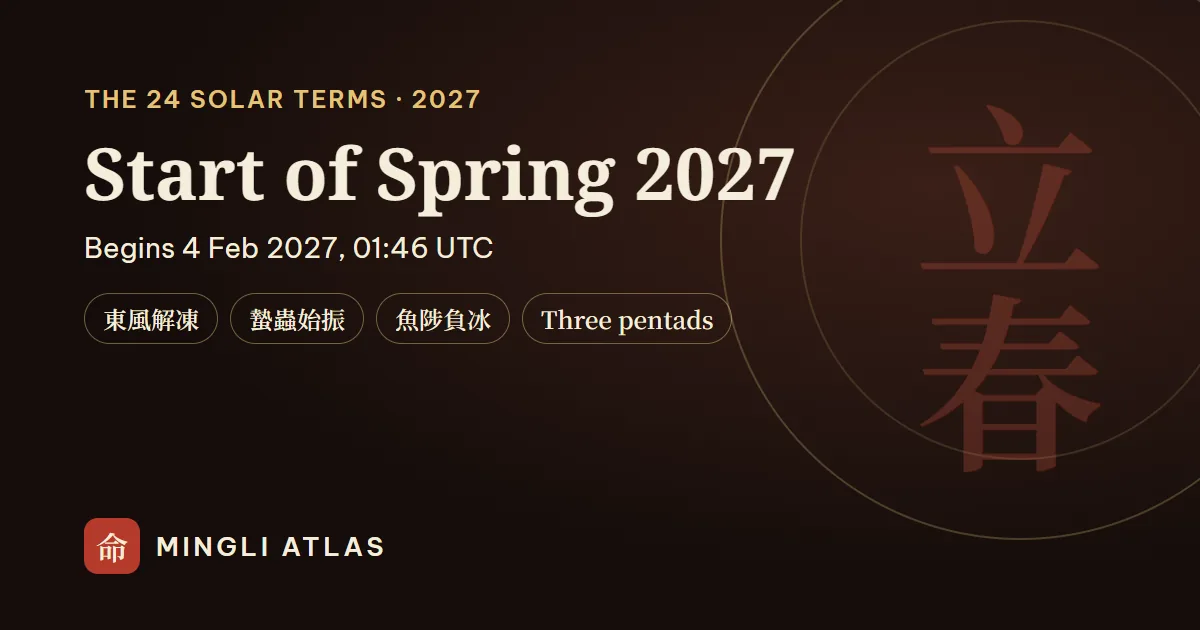
| Lìchūn (Start of Spring) | 立春 | 315° | jie, opens Yin 寅 month | 4 February 2026, 03:02 | 4 February 2027, 08:46 |
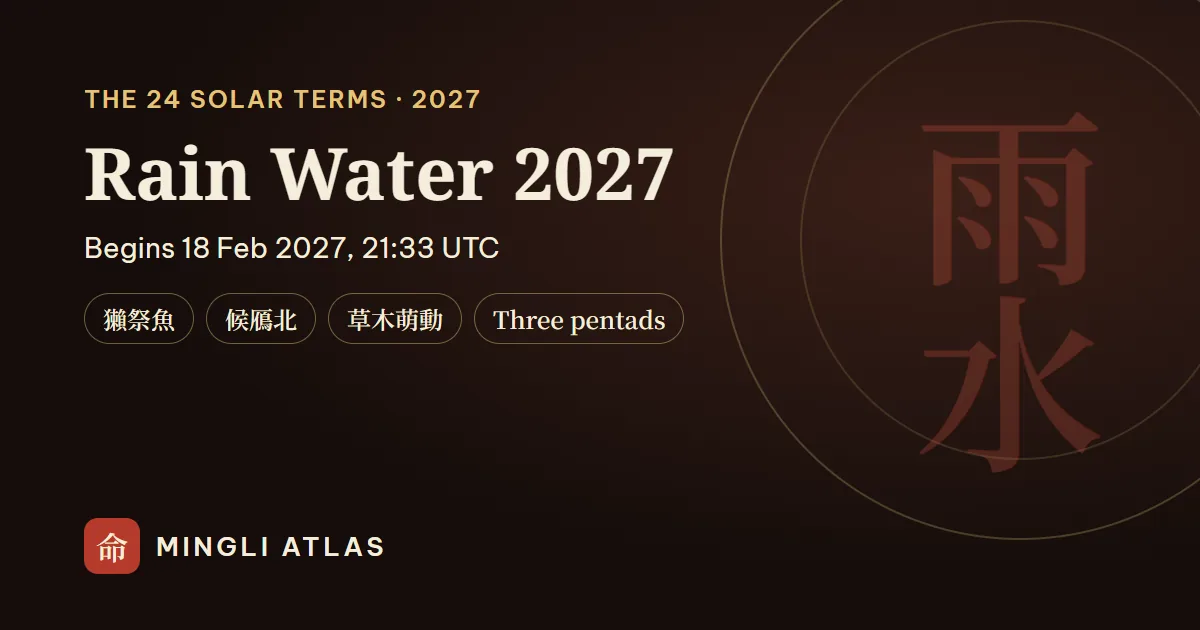
| Yǔshuǐ (Rain Water) | 雨水 | 330° | zhongqi, mid Yin 寅 month | 18 February 2026, 22:51 | 19 February 2027, 04:33 |
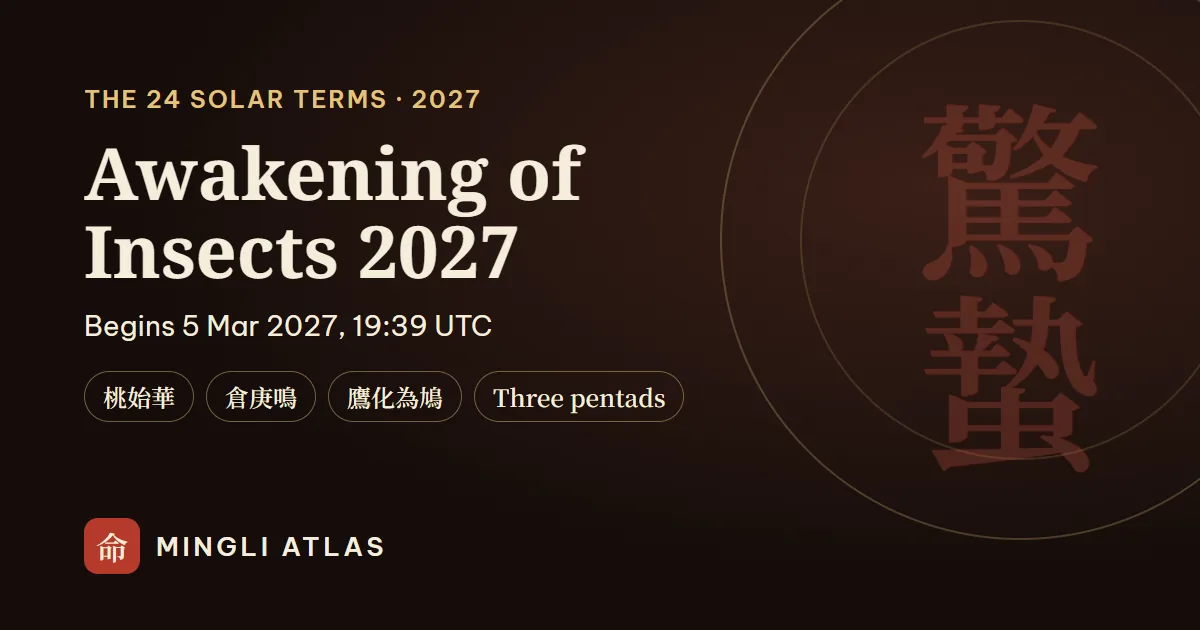
| Jīngzhé (Awakening of Insects) | 驚蟄 | 345° | jie, opens Mao 卯 month | 5 March 2026, 20:59 | 6 March 2027, 02:39 |
| Chūnfēn (Spring Equinox) | 春分 | 0° | zhongqi, mid Mao 卯 month | 20 March 2026, 21:45 | 21 March 2027, 03:24 |
| Qīngmíng (Clear and Bright) | 清明 | 15° | jie, opens Chen 辰 month | 5 April 2026, 01:40 | 5 April 2027, 07:17 |
| Gǔyǔ (Grain Rain) | 穀雨 | 30° | zhongqi, mid Chen 辰 month | 20 April 2026, 08:39 | 20 April 2027, 14:17 |
| Lìxià (Start of Summer) | 立夏 | 45° | jie, opens Si 巳 month | 5 May 2026, 18:48 | 6 May 2027, 00:25 |
| Xiǎomǎn (Grain Buds) | 小滿 | 60° | zhongqi, mid Si 巳 month | 21 May 2026, 07:36 | 21 May 2027, 13:18 |
| Mángzhòng (Grain in Ear) | 芒種 | 75° | jie, opens Wu 午 month | 5 June 2026, 22:48 | 6 June 2027, 04:25 |
| Xiàzhì (Summer Solstice) | 夏至 | 90° | zhongqi, mid Wu 午 month | 21 June 2026, 15:24 | 21 June 2027, 21:10 |
| Xiǎoshǔ (Minor Heat) | 小暑 | 105° | jie, opens Wei 未 month | 7 July 2026, 08:56 | 7 July 2027, 14:37 |
| Dàshǔ (Major Heat) | 大暑 | 120° | zhongqi, mid Wei 未 month | 23 July 2026, 02:13 | 23 July 2027, 08:04 |
| Lìqiū (Start of Autumn) | 立秋 | 135° | jie, opens Shen 申 month | 7 August 2026, 18:42 | 8 August 2027, 00:26 |
| Chǔshǔ (End of Heat) | 處暑 | 150° | zhongqi, mid Shen 申 month | 23 August 2026, 09:18 | 23 August 2027, 15:14 |
| Báilù (White Dew) | 白露 | 165° | jie, opens You 酉 month | 7 September 2026, 21:41 | 8 September 2027, 03:28 |
| Qiūfēn (Autumn Equinox) | 秋分 | 180° | zhongqi, mid You 酉 month | 23 September 2026, 07:05 | 23 September 2027, 13:01 |
| Hánlù (Cold Dew) | 寒露 | 195° | jie, opens Xu 戌 month | 8 October 2026, 13:29 | 8 October 2027, 19:17 |
| Shuāngjiàng (Frost’s Descent) | 霜降 | 210° | zhongqi, mid Xu 戌 month | 23 October 2026, 16:37 | 23 October 2027, 22:32 |
| Lìdōng (Start of Winter) | 立冬 | 225° | jie, opens Hai 亥 month | 7 November 2026, 16:52 | 7 November 2027, 22:38 |
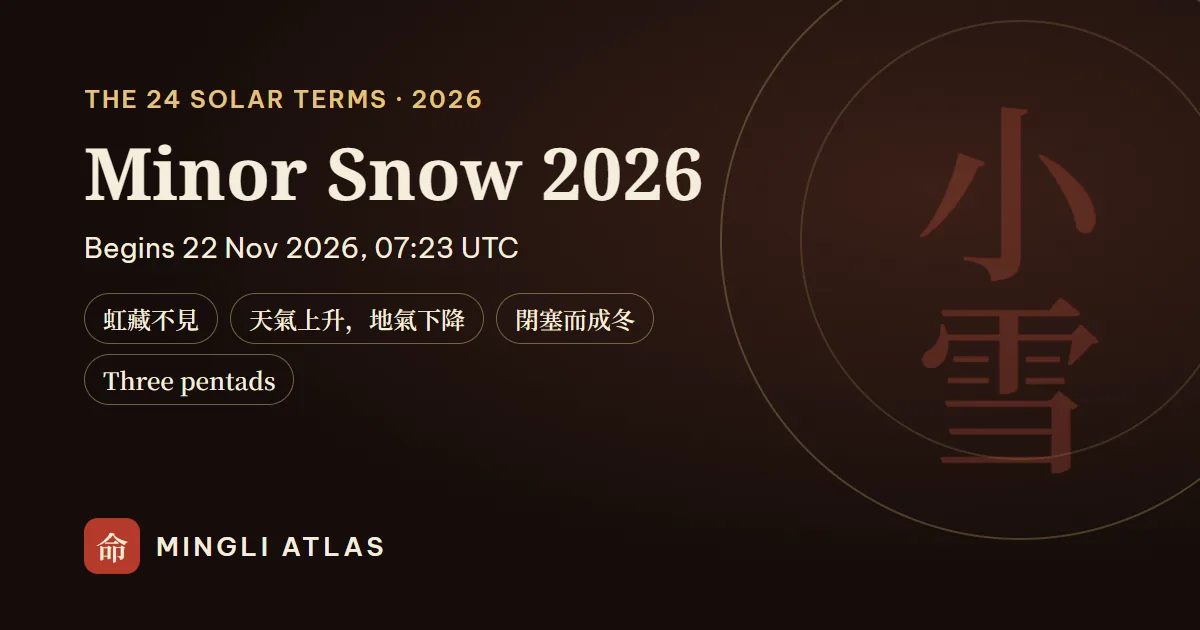
| Xiǎoxuě (Minor Snow) | 小雪 | 240° | zhongqi, mid Hai 亥 month | 22 November 2026, 14:23 | 22 November 2027, 20:16 |
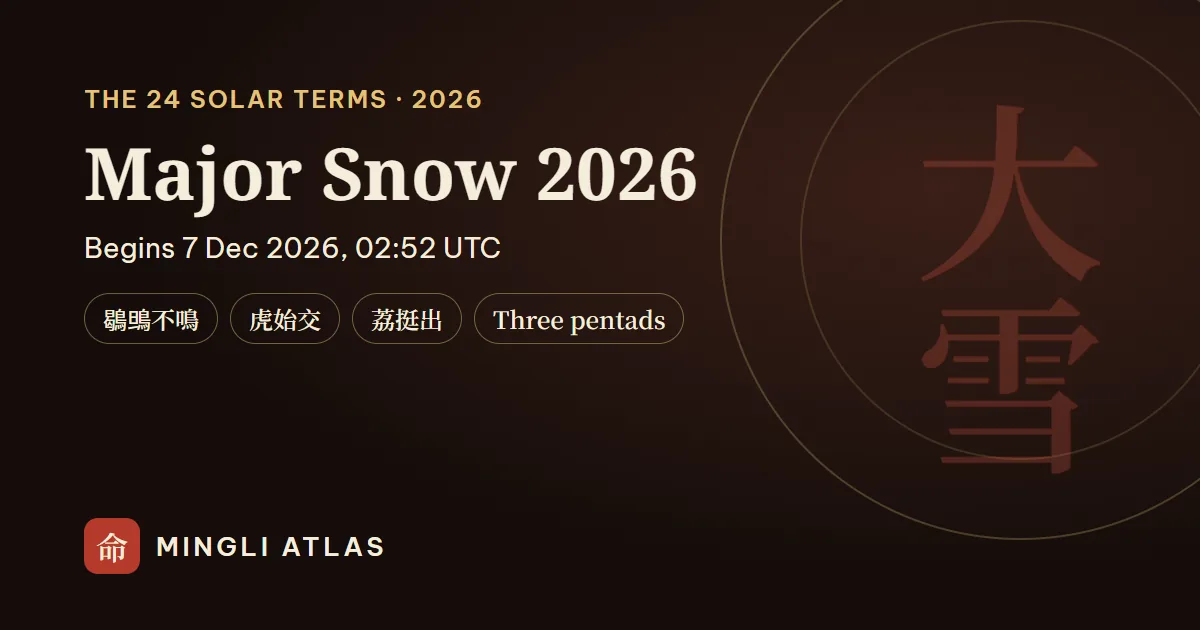
| Dàxuě (Major Snow) | 大雪 | 255° | jie, opens Zi 子 month | 7 December 2026, 09:52 | 7 December 2027, 15:37 |
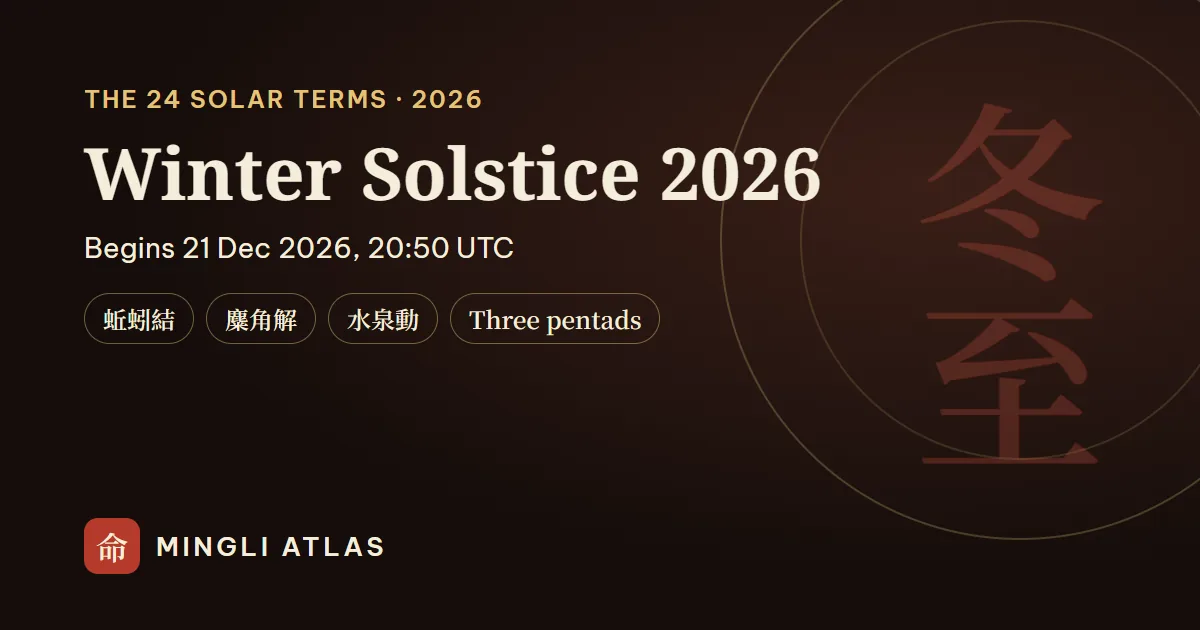
| Dōngzhì (Winter Solstice) | 冬至 | 270° | zhongqi, mid Zi 子 month | 22 December 2026, 03:50 | 22 December 2027, 09:42 |
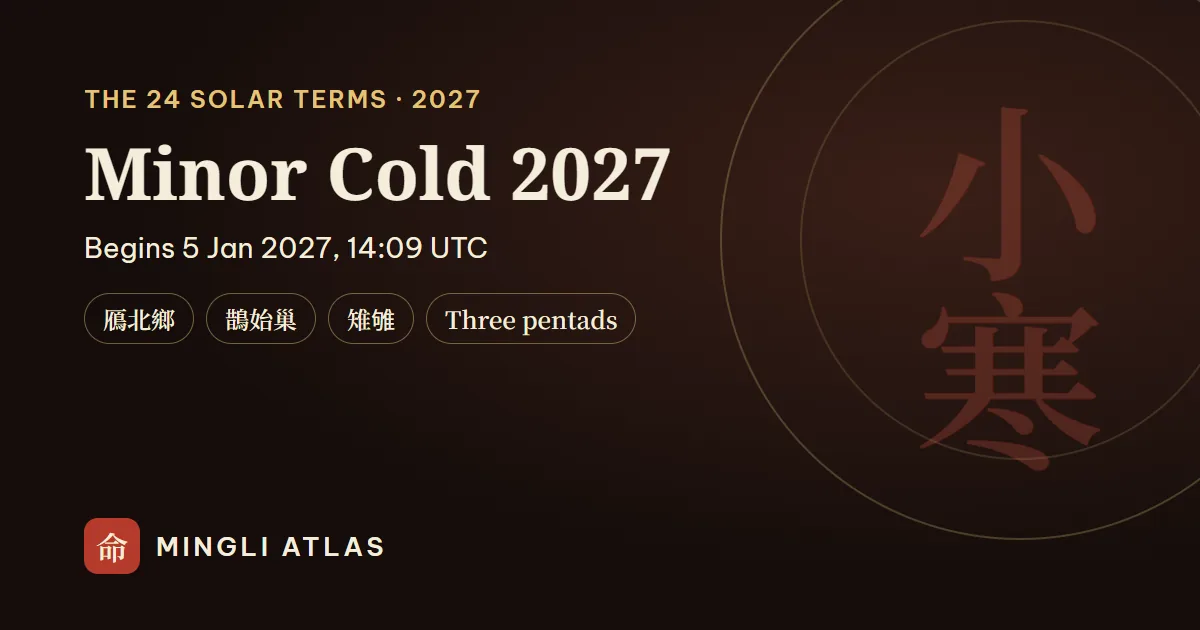
| Xiǎohán (Minor Cold) | 小寒 | 285° | jie, opens Chou 丑 month | 5 January 2026, 15:23 | 5 January 2027, 21:09 |
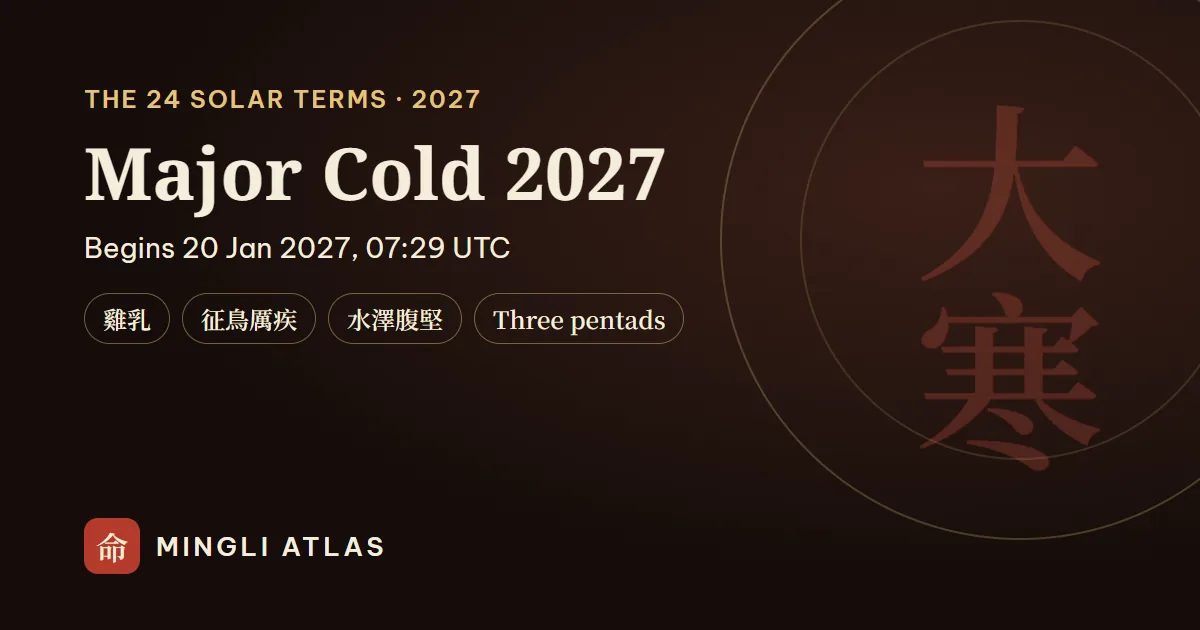
| Dàhán (Major Cold) | 大寒 | 300° | zhongqi, mid Chou 丑 month | 20 January 2026, 08:44 | 20 January 2027, 14:29 |
Jie and zhongqi: what is the difference?
Rule fact
The 24 terms alternate between 12 jie (節), which open a solar month, and 12 zhongqi (中氣), which fall in the middle of one. The Yi Zhou Shu lists the twelve zhongqi, three for each season.
「春三月中氣:雨水、春分、穀雨。夏三月中氣:小滿、夏至、大暑;秋三月中氣:處暑、秋分、霜降;冬三月中氣:小雪、冬至、大寒。」
Yi Zhou Shu (逸周書), chapter 周月
Solar terms in a BaZi chart
Rule fact
BaZi counts months by the jie terms, not by the lunar new moon: each jie opens a new month and changes the month pillar, starting with Lichun, which opens the Yin (Tiger) month. Lichun also changes the year, so someone born after Lunar New Year but before Lichun still takes the previous year’s pillar. So if you were born close to a jie, check its exact start time: a few minutes either side can change the month pillar.
What are the 72 pentads?
Traditional view
Each solar term splits into three pentads (候) of about five days, so the year has 72. Each pentad is named after something seen in nature, such as the east wind thawing the ice or thunder first sounding. This site follows the Yueling Qishier Hou Jijie and notes where the Yi Zhou Shu or the Book of Rites word a pentad differently.
Seasonal care in spring, after the Neijing
Traditional view
The three months of spring are called ‘issuing forth and spreading out’: heaven and earth give life together, and all things flourish. Terms of spring: Start of Spring, Rain Water, Awakening of Insects, Spring Equinox, Clear and Bright, Grain Rain. This is classical self-care theory, not medical advice.
「春三月,此謂發陳。天地俱生,萬物以榮。」
Huangdi Neijing, Suwen (素問), chapter 四氣調神大論
Seasonal care in summer, after the Neijing
Traditional view
The three months of summer are called ‘lush and flowering’: the qi of heaven and earth mingle, and all things blossom and bear fruit. Terms of summer: Start of Summer, Grain Buds, Grain in Ear, Summer Solstice, Minor Heat, Major Heat. This is classical self-care theory, not medical advice.
「夏三月,此謂蕃秀。天地氣交,萬物華實。」
Huangdi Neijing, Suwen (素問), chapter 四氣調神大論
Seasonal care in autumn, after the Neijing
Traditional view
The three months of autumn are called ‘form settled and level’: things have taken their shape, heaven’s qi turns brisk and earth’s qi turns clear. Terms of autumn: Start of Autumn, End of Heat, White Dew, Autumn Equinox, Cold Dew, Frost’s Descent. This is classical self-care theory, not medical advice.
「秋三月,此謂容平。天氣以急,地氣以明。」
Huangdi Neijing, Suwen (素問), chapter 四氣調神大論
Seasonal care in winter, after the Neijing
Traditional view
The three months of winter are called ‘closing and storing’: water freezes and the ground cracks; do not disturb the yang. Terms of winter: Start of Winter, Minor Snow, Major Snow, Winter Solstice, Minor Cold, Major Cold. This is classical self-care theory, not medical advice.
「冬三月,此謂閉藏。水冰地坼,無擾乎陽。」
Huangdi Neijing, Suwen (素問), chapter 四氣調神大論
Today’s solar term
Rule fact
"Your day" shows the solar term and pentad in force today beside your day pillar and BaZi chart, with one line from the classics and one small thing to do.
In this section
- Start of Spring (Lìchūn)
- Rain Water (Yǔshuǐ)
- Awakening of Insects (Jīngzhé)
- Spring Equinox (Chūnfēn)
- Clear and Bright (Qīngmíng)
- Grain Rain (Gǔyǔ)
- Start of Summer (Lìxià)
- Grain Buds (Xiǎomǎn)
- Grain in Ear (Mángzhòng)
- Summer Solstice (Xiàzhì)
- Minor Heat (Xiǎoshǔ)
- Major Heat (Dàshǔ)
- Start of Autumn (Lìqiū)
- End of Heat (Chǔshǔ)
- White Dew (Báilù)
- Autumn Equinox (Qiūfēn)
- Cold Dew (Hánlù)
- Frost’s Descent (Shuāngjiàng)
- Start of Winter (Lìdōng)
- Minor Snow (Xiǎoxuě)
- Major Snow (Dàxuě)
- Winter Solstice (Dōngzhì)
- Minor Cold (Xiǎohán)
- Major Cold (Dàhán)
Related concepts
- Start of Spring (Lìchūn)
- Rain Water (Yǔshuǐ)
- Awakening of Insects (Jīngzhé)
- Spring Equinox (Chūnfēn)
- Clear and Bright (Qīngmíng)
- Grain Rain (Gǔyǔ)
- Start of Summer (Lìxià)
- Grain Buds (Xiǎomǎn)
- Grain in Ear (Mángzhòng)
- Summer Solstice (Xiàzhì)
- Minor Heat (Xiǎoshǔ)
- Major Heat (Dàshǔ)
- Start of Autumn (Lìqiū)
- End of Heat (Chǔshǔ)
- White Dew (Báilù)
- Autumn Equinox (Qiūfēn)
- Cold Dew (Hánlù)
- Frost’s Descent (Shuāngjiàng)
- Start of Winter (Lìdōng)
- Minor Snow (Xiǎoxuě)
- Major Snow (Dàxuě)
- Winter Solstice (Dōngzhì)
- Minor Cold (Xiǎohán)
- Major Cold (Dàhán)
Put it into practice
Scope: this page explains a traditional symbolic system. It is not a scientific finding and does not replace your own judgement or professional advice. Sources and calculation rules: see the Methodology page.